Why Pack Mobility Essentials for a Senior Road Trip?

Time:2026-10-21 Author:Isabella
0%

A senior road trip can be memorable, but mobility needs deserve careful planning. Comfort, balance, medication routines, and emergency access may change from one stop to the next. A loose walking aid in the trunk can become a frustrating obstacle. A missing cushion can turn a scenic break into an exhausting transfer.

The World Health Organization and UNICEF report that more than 2.5 billion people need assistive products worldwide. Access remains limited for nearly one billion people, especially in lower-income settings. This finding highlights a practical truth: mobility equipment is not an optional luxury. It supports independence, posture, safety, and participation during travel.

Falls are another serious concern. The U.S. Centers for Disease Control and Prevention reports that more than one in four adults aged 65 and older falls each year. Many falls cause injuries, reduced confidence, and longer recovery. A road-trip packing plan should therefore include stable footwear, prescribed mobility aids, transfer supports, hydration, and clearly labeled medications. Keep essential items within arm’s reach, not buried under luggage.

What to pack for a road trip with a mobility-impaired senior? The answer depends on the traveler’s abilities, vehicle design, route, and medical guidance. An occupational therapist or healthcare professional can help assess transfers, seating, and fatigue risks. Small choices matter.

Pack for access.

This guide also acknowledges an imperfect reality: no checklist predicts every delay, pain flare, or unfamiliar restroom. Build flexibility into the itinerary. Plan shorter driving periods, accessible stops, and extra time for unplanned rest. A safer trip is rarely the fastest one.
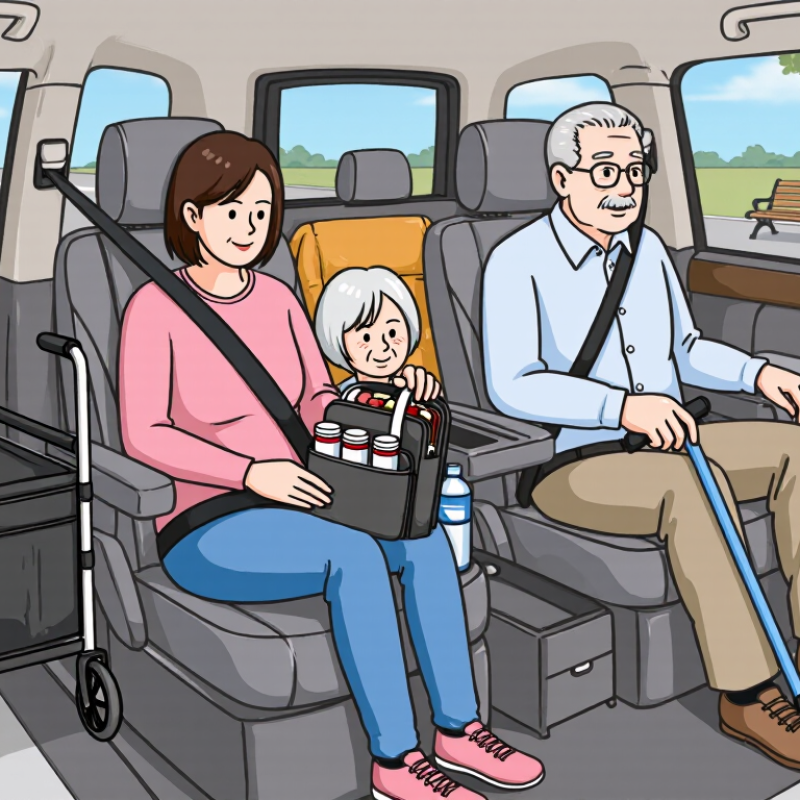
Why Pack Mobility Essentials for a Senior Road Trip?

Assess Fall Risk: One in Four Adults 65+ Falls Annually (CDC)

Why Pack Mobility Essentials for a Senior Road Trip?

A road trip can change quickly when balance, vision, or medication effects are overlooked. The CDC reports that one in four adults aged 65 and older falls each year. Falls also cause more than three million emergency department visits and over 800,000 hospitalizations annually in the United States. These figures make fall-risk planning a travel need, not an optional comfort measure.

Start with an honest assessment before departure. Has the traveler fallen recently, felt dizzy, or struggled to rise from a chair? A healthcare professional can review medications, walking stability, eyesight, and blood pressure. The CDC STEADI initiative recommends identifying these risks before they cause injury. I once underestimated short rest stops. That mistake matters. Fatigue can make a familiar curb feel unexpectedly difficult.

Pack a properly fitted walking aid, supportive shoes, and a small light for dim hotel corridors. Keep frequently used items within easy reach. Choose restrooms with grab bars when possible, and avoid rushing across parking lots. The World Health Organization identifies falls as a major source of injury among older adults, especially when environmental hazards combine with reduced strength. Better planning is not overprotective. It preserves independence. Still, every traveler’s needs differ, and a generic checklist can miss important medical concerns.

Match Mobility Aids to Trip Needs Using NHTSA Vehicle-Safety Guidance

A senior road trip becomes safer when mobility aids match the vehicle, route, and traveler’s actual needs. NHTSA vehicle-safety guidance emphasizes using the vehicle’s seating and restraint systems correctly. Whenever possible, a passenger should transfer from a wheelchair to a vehicle seat and fasten the lap and shoulder belt. The wheelchair should be folded and secured so it cannot move during sudden braking.

A cane may suit short stops, while a walker can provide steadier support across uneven pavement. Larger mobility devices need enough cargo space without blocking visibility or emergency access. Measure the folded device before leaving. Check door openings, trunk depth, and lifting height. Small details matter. I have learned that plans often fail at the first crowded rest area. A rushed loading decision can undo careful preparation.

Tips: Practice one complete loading routine at home. Keep the walking aid within easy reach after parking. Confirm that belts sit low across the hips, not the stomach or neck. If a traveler remains seated in a wheelchair during transport, use an appropriate vehicle securement system and follow its instructions carefully. Ask a qualified mobility specialist to review the setup when uncertain. Photos can help, but they cannot replace a real safety check.

Pack Walking Supports: Falls Cause Over 3 Million Older-Adult ER Visits (CDC)

Why Pack Mobility Essentials for a Senior Road Trip?

Road trips can feel relaxing, but unfamiliar stops may challenge an older traveler’s balance. A loose gravel path, wet restroom floor, or high curb can quickly become dangerous. The CDC reports that falls cause more than 3 million emergency department visits among older adults each year. That number makes walking support a safety essential, not an optional accessory.

Pack the support used during normal daily activities. This may include a properly fitted cane, walker, or wheelchair. Do not introduce unfamiliar equipment on travel day. Before leaving, check rubber tips, wheels, brakes, and folding locks. Ask a healthcare professional to confirm the correct height and safe use. A poorly adjusted aid can create trouble instead of preventing it.

Place mobility equipment where it remains easy to reach during stops. Keep it away from heavy luggage and cluttered footwells. At rest areas, encourage slow turns and steady hand placement. Rushing is often the hidden problem. I used to think short walks needed little planning, but fatigue can change balance quickly. Weather, medication effects, and long hours in a vehicle deserve attention too. A small folding seat may help, though it should never replace a stable mobility aid.

Secure Wheelchairs and Scooters Under FMVSS 222 Restraint Standards

Why Pack Mobility Essentials for a Senior Road Trip?

A senior road trip needs more than medication and comfortable shoes. Wheelchairs and scooters require deliberate securement before the vehicle moves. FMVSS No. 222 addresses school-bus seating, occupant protection, and wheelchair securement systems where applicable. It is not a universal road-trip rule. For private vehicles, confirm the vehicle type, restraint equipment, and applicable transportation requirements.

Use a four-point tiedown system when the vehicle and mobility device support it. Attach straps to approved frame points, not removable footrests or armrests. Keep the wheelchair facing forward when the system requires that position. Add a separate pelvic and shoulder restraint for the passenger. Never rely on the scooter’s parking brake alone. A loose strap can look secure until sudden braking exposes the mistake.

The U.S. Centers for Disease Control and Prevention reports that more than one in four adults aged 65 and older fall each year. A moving mobility device can increase injury risk during sharp turns or emergency stops. Before departure, inspect each buckle, hook, and belt path. Remove bags from the seat and floor. They can become projectiles. Ask the transport provider for inspection records and tested equipment, including compatibility with RESNA WC18 or WC19 practices when relevant. Standards help, but human checking still matters. I would not skip that step, even on a quiet neighborhood drive. (Sources: CDC, Important Facts About Falls; NHTSA, FMVSS No. 222; RESNA wheelchair transportation standards.)

Why Pack Mobility Essentials for a Senior Road Trip? - Secure Wheelchairs and Scooters Under FMVSS 222 Restraint Standards

Planning Dimension Recommended Data or Requirement Road-Trip Application Standards and Safety Note
Applicable restraint framework FMVSS No. 222 addresses school-bus passenger seating and crash protection, including wheelchair securement and occupant restraint provisions in applicable school-bus configurations. Confirm that the vehicle, lift, ramp, and mobility position are approved for the intended type of wheelchair or scooter. FMVSS 222 is not a universal certification for every passenger vehicle or every mobility device. Follow the vehicle and securement-system instructions.
Primary securement method Use a four-point tiedown system with two front and two rear attachment points whenever the vehicle system is designed for four-point securement. Pack the compatible tiedowns, hooks, docking hardware, or restraints before departure and check that all parts are present. The securement system must be compatible with the device frame and the vehicle anchor points; never substitute luggage straps.
Occupant restraint Use a separate occupant restraint system, normally consisting of a pelvic belt and an upper-torso belt, when the vehicle position is designed for it. Pack any required belt adapters or positioning accessories and verify that the belt can be fastened without crossing the neck or abdomen. A wheelchair tiedown restrains the mobility device; it does not replace the occupant restraint.
Wheelchair or scooter position Position the device facing forward in the designated mobility space unless the vehicle system is specifically designed and approved for another orientation. Keep the mobility device centered in the marked space and prevent contact with doors, seat frames, or other passengers. Follow the vehicle manufacturer’s designated securement orientation and anchor-point layout.
Attachment points Attach tiedowns only to structurally approved frame locations identified by the mobility-device or securement-system instructions. Avoid attaching to removable footrests, armrests, wheels, joystick assemblies, battery boxes, or other non-structural components. Improper attachment can allow movement or damage the device during sudden braking or a crash.
Occupant belt routing Route the pelvic belt low across the pelvis and route the upper-torso belt across the chest and shoulder. Remove bulky coats, bags, and blankets from beneath the belt so the restraint remains close to the body. The belt should not be routed over armrests, wheels, or detachable components.
Mobility-space planning Measure the device length, width, height, turning clearance, and total occupied weight before booking or starting the trip. Record measurements in a travel checklist; include accessories, oxygen equipment, baskets, canopies, and removable batteries. There is no single universal wheelchair or scooter dimension that fits every accessible vehicle.
Ramp or lift capacity Verify that the combined weight of the user and mobility device is within the posted lift or ramp capacity. Include the device battery and any loaded equipment when calculating the total weight. Never exceed the rated capacity or use a lift with damaged rails, belts, platforms, or warning indicators.
Battery and scooter preparation Identify the battery type, charging requirements, disconnect procedure, and any transport restrictions before departure. Carry the correct charger, keep terminals protected, and prevent loose batteries or battery covers from moving during travel. Follow the battery manufacturer’s transport and charging instructions, particularly for removable lithium-ion batteries.
Pre-departure inspection Check webbing for cuts, fraying, burns, twists, contamination, or damaged stitching; check hooks, buckles, anchor rails, and latches. Perform the inspection before every travel day and after any sudden stop or impact. Remove damaged or questionable restraint equipment from service until it has been properly evaluated.
Loose-item control Secure or remove baskets, walking aids, trays, bags, detachable headrests, and other loose accessories. Store loose items in approved compartments or secure them independently so they cannot become projectiles. Do not rely on the wheelchair or scooter tiedown to restrain unrelated luggage.
Emergency and comfort kit Carry medication, identification, emergency contacts, tire or repair supplies, a flashlight, weather protection, and essential charging equipment. Keep critical items accessible to the passenger or travel companion rather than inside an inaccessible luggage compartment. Emergency supplies support travel readiness but do not replace compliant securement and occupant restraint equipment.
Documentation to carry Keep the mobility-device manual, securement instructions, battery information, service contact details, and relevant medical information. Use a waterproof folder or digital backup so instructions remain available during roadside assistance or vehicle changes. Documentation helps confirm approved attachment locations and safe operating procedures.

Important: FMVSS No. 222 applies to specified school-bus seating and crash-protection systems. Vehicle operators should also follow the applicable vehicle, lift, tiedown, occupant-restraint, and mobility-device instructions; no single table can replace the approved installation requirements for a specific vehicle and device.

Plan Rest Stops Around WHO’s 150-Minute Weekly Activity Benchmark

Why Pack Mobility Essentials for a Senior Road Trip?

Plan Rest Stops Around WHO’s 150-Minute Weekly Activity Benchmark

A senior road trip needs more than snacks and maps. Pack supportive walking shoes, loose layers, water, prescribed medicines, and any approved mobility aid. A small cushion can reduce pressure during long drives. Keep these essentials within easy reach, not buried under luggage.

The World Health Organization recommends 150 minutes of moderate physical activity each week for most adults. This is a weekly benchmark, not a demand to exercise for 150 minutes during one journey. Plan several gentle stops instead. Walk around a safe rest area for five or ten minutes. Stretch your ankles, lift your heels, or move your shoulders beside the vehicle. These small actions can interrupt sitting time and support everyday mobility.

My first road-trip plan was too ambitious. I scheduled long walks between every stop, then noticed how quickly fatigue changed the day. A better approach uses flexible timing and honest self-checks. Stop earlier when joints feel stiff, balance changes, or breathing becomes uncomfortable. Ask a healthcare professional about suitable activity levels when medical conditions affect movement. I still forget the cushion sometimes. That mistake makes the next hour noticeably harder. A quiet bench, shaded path, and unhurried pace can make movement feel practical rather than forced.

FAQS

Why should older travelers assess fall risk before a road trip?

About one in four adults over 65 falls each year. Recent falls, dizziness, weak legs, or poor vision increase concern. A healthcare professional can review these risks before departure.

What mobility items should a senior pack?

Pack a properly fitted cane or walker, supportive shoes, and a small flashlight. Keep essential items within easy reach. Avoid carrying loose bags while walking.

How can travelers reduce falls during rest stops?

Choose level paths and restrooms with grab bars when possible. Walk slowly across parking areas. Fatigue can make a familiar curb surprisingly difficult. I once underestimated that.

How should travelers choose between a cane and a walker?

A cane may suit short, stable walks. A walker can provide better support on uneven pavement. The traveler’s strength and balance should guide the choice.

How can a mobility aid fit safely inside a vehicle?

Measure the folded device before leaving. Check door width, trunk depth, and lifting height. It must not block visibility or emergency access. Practice loading at home.

What should wheelchair passengers know about vehicle seating?

Whenever possible, transfer to a vehicle seat. Fasten the lap and shoulder belt correctly. The wheelchair should be folded and secured separately. Belts should sit low across the hips.

How should a wheelchair or scooter be secured during travel?

Use compatible, tested securement equipment. Attach straps to approved frame points, not footrests or armrests. Never rely only on a parking brake. Inspect every hook, buckle, and strap.

What should travelers do when the transport setup feels uncertain?

Ask a qualified mobility specialist to review it. Follow the equipment instructions carefully. Photos may help, but they cannot replace a hands-on inspection. Small mistakes matter.

Conclusion

Packing the right mobility essentials can make a senior road trip safer, more comfortable, and less stressful. Because about one in four adults aged 65 and older experiences a fall each year, travelers should assess fall risk before departure and choose mobility aids that match the person’s strength, balance, walking distance, and vehicle setup. A cane, walker, transfer support, or other walking aid can provide stability during stops and reduce the chance of preventable injuries, especially since falls lead to more than three million emergency-room visits among older adults annually.

When considering what to pack, ask: “What to pack for a road trip with a mobility-impaired senior?” Include properly fitted walking supports, non-slip footwear, cushions, medication and emergency information, water, and accessible personal-care items. Wheelchairs and scooters should be secured correctly according to applicable vehicle-restraint guidance, including FMVSS 222 principles. Finally, plan regular rest stops that allow gentle movement, hydration, and recovery, supporting the general goal of 150 minutes of weekly activity recommended for adults by the WHO.

Isabella

Isabella

Isabella is a dedicated marketing professional with a sharp focus on driving brand growth and engagement through strategic content creation. With an extensive background in digital marketing, she combines her passion for storytelling with her keen understanding of industry trends to deliver......