Outdoor wheelchair tires face grit, rain, heat, uneven pavements, and hidden glass. This guide introduces Top 10 Tips to Maintain Wheelchair Tires Outdoors, focusing on safety, comfort, and dependable mobility. The question is practical: How to maintain wheelchair tires for outdoor use? It requires more than checking air pressure occasionally.
The World Health Organization and UNICEF reported in their 2022 Global Report on Assistive Technology that over 2.5 billion people need assistive products worldwide. Their wheelchair guidance also emphasizes appropriate maintenance, user training, and follow-up support. These findings matter because a poorly maintained tire can increase rolling resistance, reduce control, and create unnecessary strain on the user’s shoulders. RESNA wheelchair service principles similarly support regular inspection of tires, wheels, brakes, and seating systems.
Rory Cooper, a wheelchair researcher, Paralympian, and rehabilitation engineer, has said, “A wheelchair is an extension of the person.” That perspective changes tire care. A worn tread is not merely a mechanical problem. It can affect confidence on a wet ramp or cracked sidewalk. Small checks help. Look for cuts, embedded stones, valve damage, uneven wear, and pressure loss before leaving home. Wipe away mud after a rainy trip. Store the chair away from direct sunlight.
Still, no checklist predicts every curb. Outdoor conditions vary sharply. Even careful users miss things. Therefore, this guide combines expert guidance, field-tested habits, and realistic reminders. Some recommendations may need adjustment for pneumatic, solid, or powered-wheelchair tires. When wear appears unclear, ask a qualified wheelchair technician for an inspection.
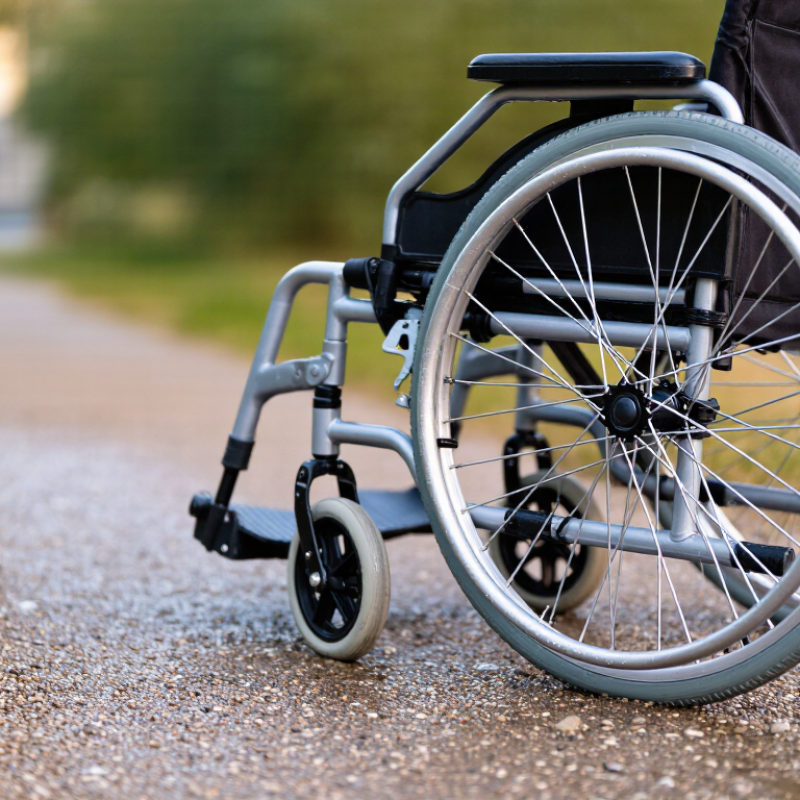
Outdoor wheelchair tires face gravel, heat, moisture, and uneven paths. Correct cold pressure helps maintain control and reduce rolling resistance. Check them weekly, even when the chair seems fine. Cold means unused for several hours, away from sunlight. Use an accurate pressure gauge and compare the reading with the manufacturer’s PSI range. Never rely only on finger pressure.
Tip: Inspect pressure before the first trip of the week. Tip: Check both tires, because they may lose air differently. Tip: Look for cuts, embedded stones, worn tread, or damaged valve stems. Tip: Inflate slowly and recheck the gauge. Overinflation can reduce comfort and traction. Underinflation may increase rim impact and tire wear. Small leaks matter.
From practical maintenance experience, temperature changes can alter pressure noticeably. A tire set correctly indoors may read differently after sitting outside overnight. Let the tires rest in the shade before measuring them. Tip: Keep a small gauge and pump accessible. Tip: Record readings for a few weeks. This can reveal a slow leak. Tip: Test the chair after inflation on a safe, flat surface. Tip: Notice pulling, vibration, or unusual effort. Tip: Replace damaged tires rather than stretching their service life. Tip: Ask a qualified wheelchair technician when the recommended range is unclear. I sometimes skipped the weekly check and regretted it on longer routes. A schedule works better than memory.
| No. | Maintenance area | Recommended timing | Practical guidance |
|---|---|---|---|
| 1 | Set cold tire pressure correctly | Check weekly and before long outdoor trips | Use a pressure gauge when the tires are cold. Inflate within the PSI range printed on the tire sidewall or specified in the wheelchair manual. Do not exceed the stated maximum pressure. |
| 2 | Inspect the tread and sidewalls | Weekly | Look for cuts, cracks, bulges, embedded glass, stones, or exposed casing. Damage on the sidewall can weaken the tire and may require prompt replacement. |
| 3 | Remove sharp debris | After each outdoor outing | Clear thorns, wire, gravel, and other debris from the tread using appropriate tools. Avoid pulling out a penetrating object until the tire can be checked for air loss. |
| 4 | Check for slow leaks | Weekly or whenever pressure drops | If a tire repeatedly loses air, inspect the valve, tube, rim, and tire for leaks. A persistent leak should be repaired or assessed by a qualified wheelchair or bicycle service technician. |
| 5 | Verify wheel and axle security | Monthly and after impacts | Confirm that quick-release axles, axle nuts, and wheel attachments are fully engaged and secure. The wheel should rotate freely without excessive side-to-side movement. |
| 6 | Check wheel alignment and tracking | Monthly or when the chair pulls to one side | Uneven tracking, rubbing, or rapid wear on one side may indicate alignment or frame issues. Arrange a professional inspection rather than bending or modifying components yourself. |
| 7 | Clean tires after wet or muddy use | After use on mud, salt, or standing water | Rinse away mud, road salt, and grit with clean water, then dry the tires and metal parts. Avoid directing high-pressure water at bearings, hubs, valves, or electrical components. |
| 8 | Reduce exposure to heat and sunlight | Whenever the chair is stored outdoors | Store the wheelchair in a cool, dry, shaded area. Prolonged ultraviolet exposure, high heat, and contact with oils or solvents can accelerate rubber deterioration. |
| 9 | Use suitable surfaces and avoid overloading | Every trip | Avoid sharp edges, deep potholes, broken glass, and surfaces that exceed the wheelchair’s intended use. Keep the combined user, equipment, and load within the wheelchair’s rated capacity. |
| 10 | Replace worn or aged tires | At the first sign of unsafe wear | Replace tires with bald tread, repeated punctures, visible cords, deep cracks, bulges, or reduced grip. Replace tubes and rim tape when they are damaged or no longer holding air reliably. |
Add the rider, wheelchair, backpack, and removable equipment. Compare this total with the lowest rating among the tire, rim, axle, and chair. Use the weakest link. If the rating is unclear, stop riding and ask a qualified technician.
It addresses wheelchair static, impact, and fatigue strength. It does not replace tire-specific load information. Outdoor vibration and potholes still add stress.
Check tread cuts, embedded gravel, flattening, and uneven wear. Inspect sidewalls for cracks, bulges, or exposed casing. Look around the valve stem. Small details matter.
Low pressure increases rolling resistance, sidewall flex, and heat. Excess pressure can reduce comfort and wet-surface grip. Check pressure when the tires are cool.
Check pressure before longer trips and inspect the valve area. A slow leak may appear only after movement. Keep the valve cap fitted. I sometimes miss tiny leaks.
Reduce speed before puddles, painted crossings, and smooth stone. Avoid sharp turns and sudden braking. Keep both hands ready for controlled braking. Slow down early.
Spin each wheel gently and watch for side-to-side wobble. Check loose spokes, bent spokes, rim dents, axle locks, handrims, and fasteners. Listen for clicking.
Recheck after rain, gravel roads, curb descents, or unusually heavy use. Dry sidewalls and rims with a clean cloth. Mud can hide damage. My routine is not perfect.
How to maintain wheelchair tires for outdoor use? Start by setting the tires to the manufacturer’s recommended cold PSI range and checking pressure at least once a week. Proper inflation supports smoother movement, better control, and safer handling. The tires’ load capacity should also match the wheelchair’s weight requirements and the strength and safety principles described in ISO 7176-8.
Before every outdoor trip, inspect the tread, sidewalls, valves, and spokes for cracks, cuts, bulges, loose parts, or embedded objects. Reduce speed on wet or slippery ground, and avoid sudden turns or braking. ASTM F1951 can help evaluate wheelchair rolling resistance when comparing surfaces and equipment performance. After use, clean away mud, sand, and moisture, rotate tires when appropriate to promote even wear, and replace any tire at the first clear sign of damage, severe flattening, or reduced traction. Regular inspections and timely maintenance help keep outdoor travel stable, comfortable, and dependable.

 Iowa Medical