5 Reasons Seniors Avoid Walking Aids and How to Encourage Use?

Time:2026-06-04 Author:Amelia
0%

Many seniors hesitate to use walking aids. This reluctance raises an important question: "Why do seniors refuse to use walking aids and how to help?" Dr. Emily Johnson, a gerontologist, explains, “Fear of losing independence often stops seniors from embracing mobility aids.”

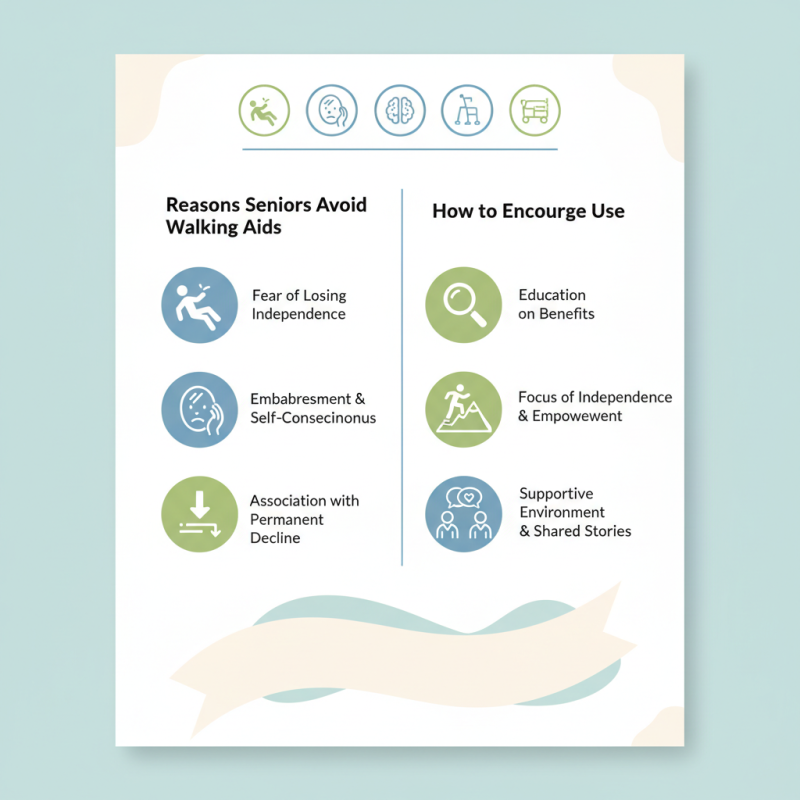
Fear plays a significant role in this hesitation. Seniors often associate walking aids with aging and loss of strength. They may feel embarrassed or self-conscious about their mobility issues. Furthermore, many worry that using a walking aid signals a permanent decline. This mindset can hinder their assessment of the benefits walking aids offer.

Educating seniors about the positive impact of walking aids is crucial. Encouragement should focus on independence instead of dependence. Personal stories and testimonials can help erase the stigma. It's essential to create a supportive environment where seniors feel comfortable discussing their fears and exploring solutions.
5 Reasons Seniors Avoid Walking Aids and How to Encourage Use?

Understanding the Common Reasons Seniors Resist Using Walking Aids

Many seniors avoid walking aids due to a sense of pride or fear. They may associate these devices with aging and dependency. This mindset can create a negative perception, leading them to reject what could enhance their mobility. The stigma attached to walking aids needs addressing. Encouraging open discussions about aging and mobility can help change these attitudes.

Another common reason is the discomfort of using walking aids. Some seniors find them cumbersome or challenging to handle. They may worry about losing balance or not using the aids correctly. In these cases, education becomes crucial. Demonstrating how to use walking aids effectively can build confidence. Providing hands-on experience helps seniors see that these tools can offer safety and independence.

Many seniors also fear attracting unwanted attention. They may feel self-conscious in public spaces. This fear can lead them to forgo the support they need. Offering peer support groups can help seniors feel understood and less isolated. Sharing stories of overcoming these fears can inspire others to embrace walking aids as valuable tools rather than symbols of weakness.

5 Reasons Seniors Avoid Walking Aids and How to Encourage Use

Reason Description Encouragement Strategy
Stigma Many seniors feel embarrassed or perceive walking aids as a sign of weakness. Promote positive role models and share success stories of active seniors using aids.
Independence Seniors often fear that using aids will make them reliant on others. Emphasize how walking aids can enhance independence by improving mobility and safety.
Inconvenience Some seniors find walking aids cumbersome to carry or use. Introduce lightweight and portable options that are easy to maneuver.
Cost The financial investment required for quality walking aids can be a deterrent. Provide information on insurance coverage and financial assistance programs.
Fear of Falling Some seniors worry that using a walking aid may lead to falls or accidents. Educate on the safety benefits of using aids and offer training sessions for proper use.

The Impact of Pride and Independence on Seniors' Mobility Choices

Pride and independence significantly influence seniors' choices regarding walking aids. Many seniors see mobility devices as a sign of decline. This perception can lead to feelings of embarrassment. A report from the National Institute of Aging states that about 70% of seniors avoid using aids due to worries about how they appear to others.

Independence is a cornerstone of senior life. Many believe walking aids limit their self-sufficiency. The desire to maintain an active lifestyle often overshadows safety concerns. Data shows that seniors who embrace mobility aids report fewer falls and greater confidence when moving about. Yet, more than half still resist. They fear losing control over their mobility.

Effective encouragement requires empathy and understanding. Simple conversations can help address their concerns. Show them examples of others enjoying freedom with walking aids. Highlight the stories of seniors who have reclaimed their lives. Education can shift perspectives about mobility aids from stigma to empowerment.

Educating Seniors on the Benefits of Walking Aids for Safety and Balance

Many seniors are unaware of the safety benefits that walking aids can provide. Their reluctance often stems from a fear of losing independence. Some believe that using a walking aid makes them appear fragile. This misconception can prevent them from utilizing tools that enhance their mobility and balance.

Education is key in changing these perceptions. Informing seniors about the statistics showing reduced fall rates with walking aids can motivate them. Personal stories from peers who have benefited can also create a connection. Visual demonstrations might help them see how easy and supportive these aids can be in daily life.

Creating a supportive environment is essential. Families and caregivers can encourage seniors by discussing their specific needs. Listening to their concerns can make a difference. This approach helps seniors feel valued and understood, ultimately allowing them to embrace the benefits of walking aids for greater safety and independence.

Reasons Seniors Avoid Walking Aids

Encouraging Family Support to Promote the Use of Walking Aids

Encouraging family support can significantly enhance the adoption of walking aids among seniors. Research shows that approximately 60% of older adults resist using walking aids due to concerns over independence and stigma. Many feel that accepting help signifies weakness. Families can play a crucial role in altering this mindset. A positive approach from family members can alleviate anxiety and encourage acceptance of mobility devices as tools for independence, not limitations.

Studies indicate that family support can increase adherence to walking aids by nearly 40%. Engaging in open conversations about mobility issues can reshape perceptions. Families should discuss the benefits of walking aids, such as increased safety and improved quality of life. Incorporating stories from other seniors who have successfully used walking aids may also help.

In addition, practical demonstrations by family members might ease initial discomfort. Showing how a walking aid can enhance daily activities fosters a sense of normalcy. It is important to encourage regular use and celebrate small achievements. The journey towards better mobility is often gradual. Families should be patient and offer constant encouragement, even when progress seems slow. This support can transform how walking aids are perceived and utilized in daily life.

Strategies for Overcoming Stigma Around Walking Aids in Senior Communities

Many seniors hesitate to use walking aids due to social stigma. This perception can create barriers that prevent them from enjoying improved mobility. To encourage acceptance, addressing misconceptions is vital. Community workshops can foster understanding. Engaging discussions about the benefits of walking aids may shift perceptions.


Another effective strategy is peer support. When seniors see their friends using walking aids, it becomes more normalized. Organizing group activities that promote walking aids can help. These events could include demonstrations and testimonials from those who have benefited. Celebrating small victories can empower individuals to make positive changes.


Education plays a key role. Providing clear information about the advantages of using walking aids can lessen fears. Many seniors are unaware of the safety features and comfort they offer. Sharing real-life success stories can inspire others to embrace these tools. The journey to acceptance requires patience and ongoing dialogue.

FAQS

: Why do many seniors avoid using walking aids?

: Many seniors fear that using aids signals decline, leading to embarrassment.

How does independence influence seniors' mobility choices?

Independence is crucial for seniors, and many believe walking aids will limit it.

What percentage of seniors report avoiding mobility aids?

About 70% of seniors avoid using aids due to worries about appearance.

How can walking aids improve senior mobility?

Seniors using mobility aids report fewer falls and greater confidence while moving.

What can families do to encourage seniors to use walking aids?

Families should listen to concerns and discuss specific needs to create a supportive environment.

What is a common misconception about walking aids?

Many seniors believe using aids makes them appear fragile or dependent.

How can education change seniors' perspectives about walking aids?

Providing statistics on safety and sharing personal success stories can shift their views.

Why is it important to address seniors' fears about mobility aids?

Addressing their fears helps seniors feel valued and understood, promoting acceptance.

What role do peer stories play in encouraging seniors?

Hearing from peers who have benefited can motivate and connect with seniors.

How can visual demonstrations help seniors with mobility aids?

Visual demonstrations show how easy and supportive walking aids can be in daily life.

Conclusion

In exploring the question, "Why do seniors refuse to use walking aids and how to help?", we uncover several common reasons for their reluctance. Many seniors prioritize their pride and independence, fearing that accepting assistance will diminish their autonomy. This emotional barrier can be compounded by a lack of understanding regarding the safety and balance benefits that walking aids provide. To combat this, it's essential to educate seniors about how these tools can enhance their mobility and overall quality of life.

Encouraging family support plays a crucial role in overcoming these stigmas. By fostering open conversations about mobility challenges and the advantages of walking aids, families can help shift perspectives within senior communities. Furthermore, implementing strategies to reduce the stigma associated with walking aids can empower seniors to embrace them as valuable companions in their journey towards maintaining independence and safety.

Amelia

Amelia

Amelia is a seasoned marketing professional with a wealth of expertise in our company’s core offerings. With an unwavering passion for driving growth and innovation, she plays a pivotal role in shaping our marketing strategies and enhancing brand visibility. A key aspect of her responsibilities......