Top Tips for Flying With a Folding Power Wheelchair?

Time:2026-09-26 Author:Sienna
0%

How to travel by plane with a folding power wheelchair? The answer begins with details, not guesswork: your chair’s folded dimensions, total weight, battery chemistry, and folding instructions. These facts help you discuss handling and storage with the airline before travel day. The U.S. Department of Transportation’s 2023 Air Travel Consumer Report recorded 11,527 mishandled wheelchairs and scooters. That figure is a reminder: clear plans matter, though no checklist can guarantee perfect handling.

Wheelchair-travel journalist John Morris, founder of WheelchairTravel.org, emphasizes the value of researching accessibility details before a trip. In essence, his advice is to verify arrangements rather than rely on assumptions. For a folding power chair, that means asking the airline how it will be handled, sharing the manufacturer’s battery instructions, and carrying a concise folding guide. Keep photos of the chair and its controls on your phone. Small details help.

This guide covers practical steps for booking, airport preparation, boarding, and arrival. It also points out an awkward truth: a chair can fold neatly and still be vulnerable during handling. Check the airline’s current procedures, confirm key details directly, and keep written records of your conversations. A little repetition may feel excessive. It can also prevent avoidable confusion when the terminal is busy.
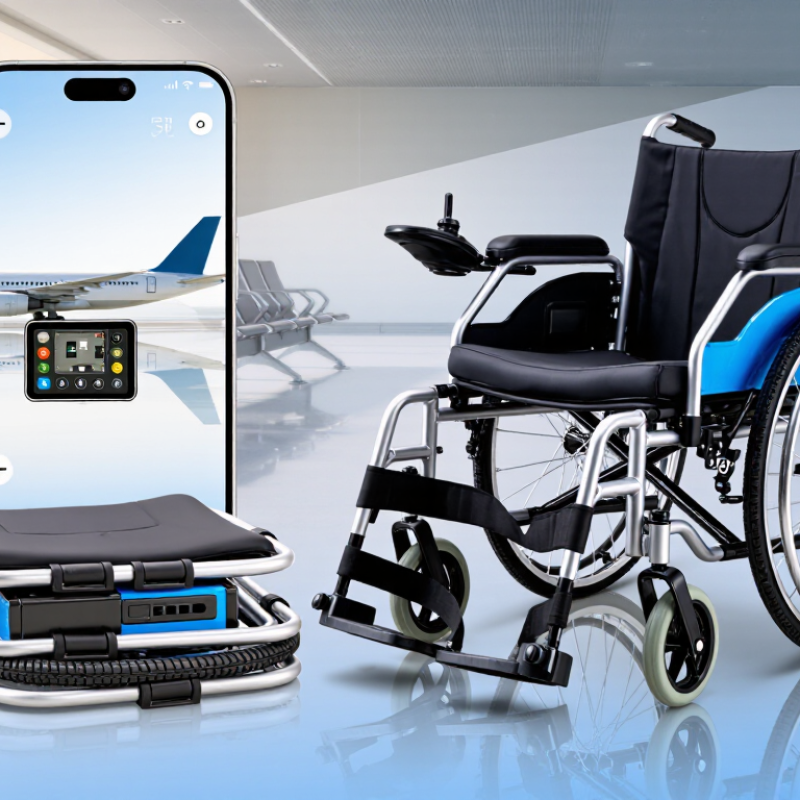
Top Tips for Flying With a Folding Power Wheelchair?

Review Airline Rules and Folding Wheelchair Requirements

Before booking, ask the airline for its current rules for powered mobility devices. Folding does not automatically mean a wheelchair can travel in the cabin. Tell the airline its folded dimensions, total weight, battery chemistry, and watt-hour rating. Share the operating manual, especially instructions for switching off power and releasing the brakes. Small details matter. Request written confirmation about whether the battery stays attached, must be disconnected, or needs special handling. Requirements can differ by carrier and aircraft, so verify them for every flight on your itinerary.

The U.S. Department of Transportation’s Air Travel Consumer Report for December 2022 recorded 11,527 mishandled wheelchairs and scooters among 763,099 transported by reporting airlines, about 1.51 percent. “Mishandled” includes delayed, damaged, or lost devices; the figure is a reason to document your chair’s condition before check-in. Photograph the frame, controls, wheels, and battery, and keep the images with your travel papers. Ask where the chair will be loaded and how you can receive it after landing. If a joystick or other part detaches, label it and carry it with you when permitted. Do not assume staff know the release sequence; a clear, printed instruction sheet can help.

Confirm Battery Type, Limits, and Required Documentation

Before booking, identify the exact battery chemistry and capacity of your folding power wheelchair. Check the battery label for its watt-hour rating, or ask the manufacturer for written specifications if the label is worn or hidden. Lithium-ion and sealed lead-acid batteries follow different handling requirements. Do not guess from the charger or chair model.

Airline limits and procedures can vary, even between flights on the same itinerary. Contact each operating airline before travel and provide the battery type, watt-hours, and whether it can be removed without tools. Ask where the chair and any spare battery must travel, and how terminals should be protected. Keep it readable. A clear photo of the label can help, but it may not replace documents requested by the airline.

Carry the chair’s manual and a manufacturer’s battery specification sheet. If available, request the battery’s UN 38.3 test summary, though not every airline will ask for it. Save written confirmation of any special handling instructions, then bring copies in your carry-on bag. It is easy to assume a folding chair needs no extra paperwork; that assumption can create delays at check-in. One detail is often missed: tell staff how the chair folds and where its freewheel control is, so they can handle it safely.

Prepare and Protect the Wheelchair for Air Transport

Top Tips for Flying With a Folding Power Wheelchair?
Prepare and Protect the Wheelchair for Air Transport

Before travel, ask the operating airline how it handles your exact wheelchair model, battery type, and folded dimensions. IATA passenger guidance recommends sharing details about battery-powered mobility aids in advance. Confirm whether the battery can stay installed, and request the airline’s written packing and handover instructions. Rules and procedures can vary. Small details matter.

Use the wheelchair’s manual to fold and secure it; avoid straps that press against the joystick or folding joints. Fit a firm cover over the controls, pad exposed frame corners, and remove loose accessories and the seat cushion. Label detachable parts and keep them together in a small carry-on bag when permitted. Photograph the chair from several angles before check-in, including existing scuffs. I still find this step easy to skip when rushing.

The U.S. Department of Transportation’s 2023 Air Travel Consumer Report recorded 11,527 mishandled wheelchairs and scooters, or 1.54% of reported device transports. “Mishandled” does not mean every device was damaged, but the figure shows why a clear handover matters. Give staff a one-page note with folding steps, battery details, and a contact number. Keep it practical. Tell staff which parts must not be lifted, and ask them to confirm the chair is tagged for your destination.

Flying With a Folding Power Wheelchair: Spare Battery Limits

U.S. FAA limits for spare lithium-ion batteries carried with a mobility device.

Prepare and protect: Check the battery’s watt-hour rating and confirm requirements with your airline before travel. Protect the controls, secure loose parts, and follow the airline’s instructions for folding and handling the chair. These figures apply to spare lithium-ion batteries; requirements may vary by battery type and travel route.

Complete Airport Check-In, Security, and Boarding Steps

Before travel, contact the airline to confirm its check-in process, battery requirements, and handling options for your folding power wheelchair. Battery rules can vary, so share the battery type and capacity from the manufacturer’s label or manual. Ask whether you can use the chair to the gate and request assistance if you need an aisle chair for boarding. Arrive with extra time; counter queues can be slow. Keep the manual and any battery information easy to reach.

At check-in, explain which parts fold and which must stay protected. Remove loose bags, cushions, and detachable controls, then keep them with you when practical. Take a clear photo of the chair before handing it over. It may help staff see how it should be handled. At security, tell officers about the chair and any parts that cannot be removed. Screening steps differ by airport, so ask for instructions rather than attempting to disconnect components yourself.

At the gate, confirm where the chair will be collected after landing and whether it can be returned near the aircraft door. Staff may ask you to transfer to an aisle chair while the wheelchair is loaded. Point out delicate areas, such as the joystick or folding latch, and attach written handling notes if useful. Don’t force a fold that feels stuck. I once assumed a latch was fully released; it wasn’t, and a calm second check would have saved time.

Reassemble the Wheelchair and Check for Damage on Arrival

When your folding power wheelchair arrives, move it to a well-lit area before reassembling it. Keep the baggage tag and any loose parts nearby. Follow the chair’s manual, since hinges, latches, and footrests can vary. Make sure each folding joint locks fully. Do not force it. A latch that looks closed may still be loose.

Check the frame for cracks, bends, or fresh scrapes, and look closely at the wheels, casters, and footrests. Inspect the seat fabric, joystick, cables, and battery casing for tears, kinks, or visible damage. Then check that the wheels turn freely and the brakes engage. Take clear photos of anything unusual, including dents and loose parts. I once assumed a small scuff was harmless; it is better to document it before leaving the airport.

If the chair seems intact, reconnect or secure the battery as directed in the manual, then test the controls in an open, level space. Listen for new grinding or clicking sounds. Stop if the chair pulls to one side, a latch slips, or a control behaves oddly. Avoid riding it until a qualified technician has checked any suspected structural or electrical damage. Report concerns to the airline’s assistance desk before you leave, and keep a record of whom you spoke with.

Top Tips for Flying With a Folding Power Wheelchair? — Reassemble the Wheelchair and Check for Damage on Arrival
Stage What to Check or Do What to Look For If Something Is Wrong
Before unpacking Move to a safe, well-lit area and photograph the wheelchair and its packaging before discarding anything. Visible dents, cracks, loose parts, torn packaging, or signs that a component is missing. Keep the packaging and photos. Report apparent damage or missing items to airline staff before leaving the airport, and follow their claim process.
Frame and folding mechanism Unfold the chair according to its user manual. Check the frame, hinges, locking points, and release mechanisms. The frame appears straight, the hinges move as intended, and the chair locks securely in its operating position. Do not force a stuck hinge or use the chair if the frame is cracked, bent, or will not lock. Request assistance and contact the supplier or service provider.
Wheels and casters Inspect the drive wheels and front casters. Check that wheels are seated correctly and rotate without rubbing. No visible cracks, severe wobble, scraping, or loose wheel fittings. Avoid riding if a wheel is loose, damaged, or obstructed. Ask for a qualified inspection before use.
Controls and cables Check that the joystick or other controller, connectors, and visible cables are attached as described in the manual. No pinched, cut, or dangling cables; controls and connectors show no obvious impact damage. Do not operate the chair if wiring is exposed or a connector is damaged. Keep clear of damaged electrical parts and arrange service.
Battery and power Confirm the battery is secured and use the normal power-on procedure in the manual. The chair powers on without an unusual smell, excessive heat, smoke, or visible battery damage. If the battery is swollen, leaking, unusually hot, or damaged, do not charge or use it. Notify airport staff and contact the appropriate service provider.
Brakes and basic operation On a level, open area, check the brakes and test movement at low speed, following the manual. The chair starts, stops, and responds normally, with no unexpected noises or warning indicators. Stop testing if the chair behaves unpredictably, will not stop properly, or displays an unfamiliar fault. Request technical assistance.
Accessories and final check Reattach removed items, such as the seat cushion, footrests, or controller, only as instructed. Check that personal belongings are accounted for. Accessories are secure, the footrests are correctly positioned, and nothing is caught in the folding joints or wheels. Do not use an unsecured accessory. Record any missing or damaged item and report it to the airline before leaving the airport when possible.

FAQS

Should I contact the airline before booking a flight with a folding power wheelchair?

Yes. Ask about your exact wheelchair, battery, folded dimensions, and total weight. Folding does not guarantee cabin storage.

What battery information should I provide?

Share the battery chemistry and watt-hour rating from its label or manual. Ask whether it stays attached or must be disconnected.

What documents can make wheelchair handling easier?

Carry the operating manual and a one-page instruction sheet. Include folding steps, power-off instructions, brake release details, and contact information.

How should I protect the wheelchair before check-in?

Cover the controls firmly and pad exposed frame corners. Remove cushions, loose bags, and detachable accessories. Avoid pressure near the joystick.

Should I photograph my wheelchair before handing it over?

Yes. Photograph the frame, wheels, controls, battery, and existing scuffs. Keep the images with your travel documents. I sometimes skip this when rushing.

Can I use my wheelchair through the airport?

Ask whether you can use it to the gate. Request assistance if boarding requires an aisle chair. Airport procedures can differ.

What should I explain during security screening?

Tell officers about the wheelchair and any parts that cannot be removed. Ask for instructions before disconnecting anything. Do not force stuck components.

How can I improve the handover at the gate?

Point out fragile areas, such as the joystick and folding latch. Confirm where you will collect the wheelchair after landing. Small details matter.

What should I do if a detachable part is removed?

Label it clearly and keep it in a small carry-on bag when permitted. This may protect the part from getting separated.

Why is careful documentation important?

Transport reports have recorded mishandled mobility devices, including delayed, damaged, or lost equipment. Clear photos and instructions support a better handover. A second check helps.

Conclusion

How to travel by plane with a folding power wheelchair? Start by contacting your airline well before departure to review its requirements for folding wheelchairs, advance notice, and handling. Confirm the wheelchair’s battery type and check the airline’s limits and documentation requirements. Prepare any requested information, such as battery details or instructions for safely folding and handling the chair.

Before arriving at the airport, fold and secure the wheelchair as directed, remove or protect detachable parts, and label any items that need special handling. At check-in, explain how the chair folds and share relevant battery documentation. Follow airport security and boarding instructions, and ask staff to confirm how the wheelchair will be handled. When you arrive, inspect the chair for damage before reassembling it, then check that it folds, powers on, and operates as expected. Planning ahead and communicating clearly can make the trip smoother.

Sienna

Sienna

Sienna is a skilled marketing professional with a deep expertise in our company’s core products and services. With a passion for innovation and detail, she plays a pivotal role in crafting insightful blog posts that not only highlight the unique features of our offerings but also provide valuable......