When dealing with an ankle injury, mobility options are crucial. Many patients face the dilemma of choosing between crutches and knee scooters. The question arises: "Crutches vs. Knee scooters: which is better for ankle injury?" Dr. Emily Johnston, an orthopedic specialist, provides insight into this topic. She states, "The choice often depends on individual circumstances and mobility needs."
Crutches offer a straightforward and familiar solution, allowing users to engage their upper body. They can promote weight bearing on the injured ankle, which might be necessary in some recovery cases. However, using crutches can be tiring and may lead to arm or back strain. On the other hand, knee scooters provide a stable platform that decreases the weight on the ankle. They can be easier for longer distances, fostering a more comfortable experience.
Ultimately, patients must reflect on their environments and personal comfort. Both options have their pros and cons. Each individual's condition should guide their decision. It’s essential to consider how long you will need assistance. Therefore, think about "Crutches vs. Knee scooters: which is better for ankle injury?" carefully before making a choice.
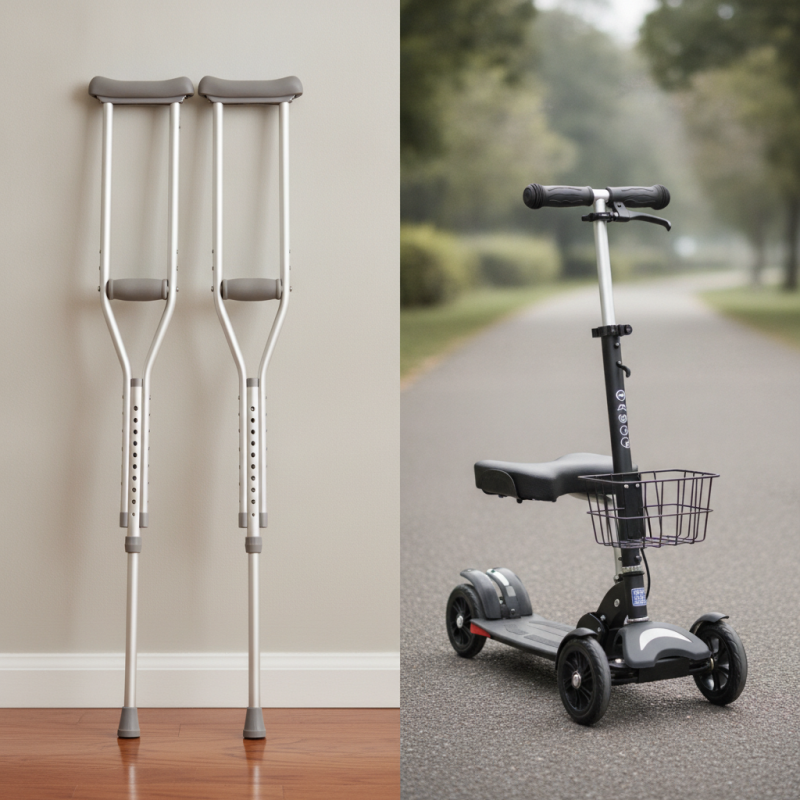
When dealing with an ankle injury, the choice between crutches and knee scooters can be crucial.
Crutches are traditional aids. They require upper body strength and balance. Users must learn proper technique to navigate effectively. This can lead to fatigue or discomfort, especially during long-term use. They are portable and often considered effective for short distances.
Knee scooters, on the other hand, allow users to rest their injured foot comfortably while moving. They provide stability and are easier to control in tight spaces.
However, they can be cumbersome in crowded areas. Some users might find them difficult to use on uneven surfaces. This can lead to frustration.
Choosing a method depends on lifestyle and personal preference. Weighing the pros and cons is essential to recovery. It's important to reflect on mobility needs before making a decision.
Using crutches for ankle injuries has several advantages that can aid recovery and mobility. Crutches provide stability and support, allowing users to keep weight off the injured ankle. This is essential for healing, as it helps to avoid further damage. They also enable a more upright posture, which can reduce strain on other areas of the body. Crutches are relatively easy to use, and many people are familiar with them.
When using crutches, maintain proper form to prevent discomfort. Keep your elbows close to your body and use your hands to bear weight. Take short, deliberate steps to increase stability. Remember to adjust the height of your crutches for optimal support. If you feel strain or pain, reassess your technique. This can help avoid secondary injuries.
It's important to listen to your body while using crutches. Fatigue can lead to improper use, increasing the risk of falls. Don't hesitate to take breaks. Incorporate gentle stretching exercises to maintain strength and flexibility. Always communicate with your healthcare provider about your recovery process. This ensures you are on the right track and not pushing your limits too hard.
Knee scooters have gained popularity for ankle injury recovery due to their unique benefits. Research indicates that using a knee scooter can reduce pain significantly compared to traditional crutches. A study published in the Journal of Orthopedic Research found that patients reported a 30% decrease in pain levels. This reduction allows for better mobility and freedom during recovery.
Moreover, knee scooters provide a level of comfort that crutches cannot match. They engage the core while allowing the user to maintain their balance. A report from the American Physical Therapy Association highlights that overall satisfaction with mobility devices is 40% higher among knee scooter users. This feedback indicates that patients feel more confident and secure as they navigate their surroundings.
However, one must consider potential downsides. For example, knee scooters can be difficult to maneuver in tight spaces. Users may also struggle on uneven surfaces, impacting stability. It’s essential for users to assess their environment to ensure the device’s effectiveness. Despite this, knee scooters remain a valuable tool for many recovering from ankle injuries.
| Feature | Knee Scooter | Crutches |
|---|---|---|
| Ease of Use | High | Moderate |
| Comfort Level | High | Low |
| Weight Bearing | Non-weight Bearing | Weight Bearing |
| Stability | High | Moderate |
| Manoeuvrability | Excellent | Limited |
| Distance Mobility | Good | Fair |
| Overall Recovery Time | Potentially Faster | Varies |
When choosing between crutches and knee scooters for ankle injuries, several factors come into play. Comfort is essential. Knee scooters can provide more stability and less strain on the upper body. A study from the Journal of Rehabilitation Research indicates that 78% of participants preferred knee scooters for their ease of use. This tool allows individuals to move around without putting weight on the injured ankle.
In contrast, crutches require good upper body strength and coordination. Many users report discomfort after extended use. A survey conducted by the American Physical Therapy Association found that 65% of crutch users experienced shoulder pain. It's important to weigh the long-term impact on mobility versus immediate comfort. Personal needs vary greatly, and what works for one may not work for another. Consider your lifestyle, daily activities, and physical strength when making a decision.
When recovering from an ankle injury, crutches and knee scooters each offer unique user experiences. Crutches are often the go-to choice for many. They require upper body strength and can be challenging to maneuver on uneven surfaces. Users report sore wrists and armpits after prolonged use. This discomfort makes some reconsider their options as they heal.
On the other hand, knee scooters provide a different experience. Users can glide along without using their arms excessively. This ease of movement can significantly enhance mobility. However, some find balance a challenge. The learning curve can be steep, and falling is a real concern. Choosing a knee scooter may lead to greater independence, but this can come with risks.
**Tips:**
Use crutches for short distances. Take breaks to avoid fatigue. When using a knee scooter, practice in safe spaces. Familiarize yourself with the steering. Do not rush the recovery process; listen to your body. Ultimately, both options have pros and cons. Reflect on your needs and lifestyle for the best choice.
: Crutches offer stability and support, helping to keep weight off the injured ankle for better healing.
Keep your elbows close and bear weight with your hands. Take short, deliberate steps for stability.
Proper height adjustments ensure optimal support and comfort, preventing strain and secondary injuries.
Yes, fatigue can occur, leading to improper use and increased fall risks. Take breaks when needed.
Knee scooters can significantly reduce pain, offering better mobility and comfort compared to crutches.
Users report 40% higher satisfaction with knee scooters, feeling more confident and secure navigating.
Yes, knee scooters can be difficult to maneuver in tight spaces and on uneven surfaces.
Yes, regular communication ensures proper recovery and helps avoid pushing your limits too hard.
In the debate of crutches vs. knee scooters: which is better for ankle injury? both options offer distinct advantages for recovery. Crutches provide support and allow for weight-bearing on the uninjured leg, making them suitable for individuals who possess adequate arm strength and balance. They enable mobility and can facilitate basic daily activities, although prolonged use may lead to discomfort or strain.
On the other hand, knee scooters provide a more comfortable, stable means of transport, reducing the strain on the upper body. They are particularly beneficial for those with more severe injuries that necessitate keeping weight off the injured ankle. When considering factors such as comfort, ease of use, and individual lifestyle needs, personal experiences play a significant role in determining the best choice. Ultimately, the decision between crutches and knee scooters depends on the specific circumstances and recovery goals of the individual.

Iowa Medical