How to Choose Between Plastic and Aluminum Bath Chairs

Time:2026-11-13 Author:Amelia
0%

Choosing a bath chair is a practical safety decision, not just a choice between two materials. A chair may sit beside a slick tub, get wet every day, and support someone shifting their weight while standing or bathing. Small details matter. Seat width, leg adjustment, drainage holes, rubber tips, and the stated weight capacity can affect comfort and stability.

Plastic vs. Aluminum bath chairs: pros and cons. Plastic models are often lightweight, affordable, and simple to clean. Aluminum frames can feel more rigid and may be easier to move than bulkier alternatives, but their quality depends on construction and fittings. Neither material makes a chair safe by itself. Check that the model fits your tub or shower, stands level, and has secure, non-slip feet. Follow the manufacturer’s assembly and care instructions, and inspect the chair regularly for loose parts, cracks, or worn tips.

The right choice depends on the user and the bathroom. A narrow tub, limited storage, sensitive skin, or difficulty lifting a chair may change what works best. Try the seat height and support when possible, and ask a healthcare professional or occupational therapist for guidance if balance or transfers are a concern. A label alone cannot tell the whole story. Even a chair that looks sturdy may wobble on an uneven floor, so check the actual fit before relying on it.
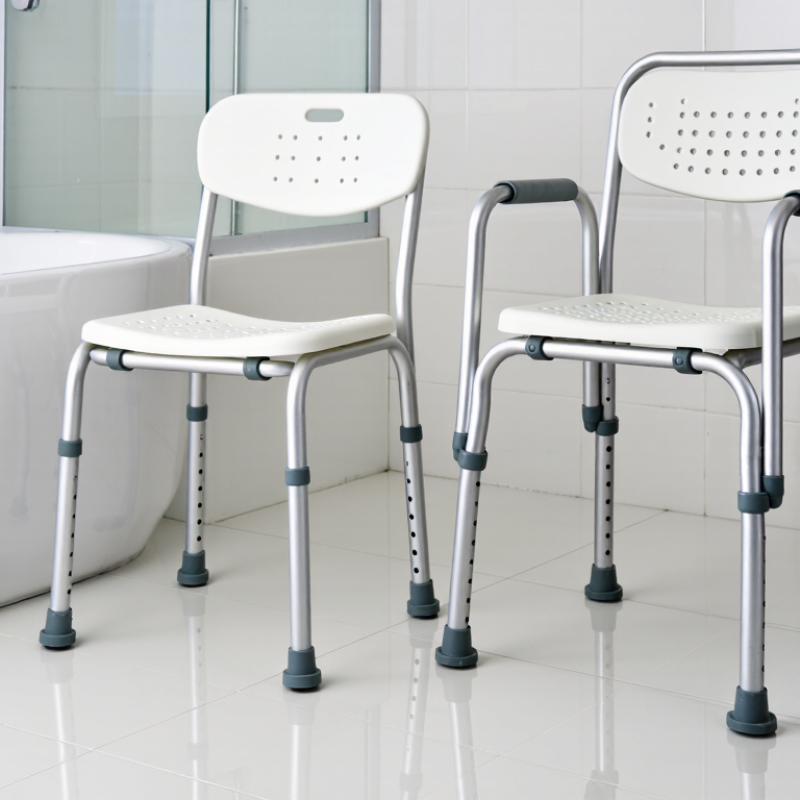
How to Choose Between Plastic and Aluminum Bath Chairs

Define the User’s Mobility and Bathing Support Needs

Start by assessing what the user can safely do, not by comparing chair materials. Can they step over the tub edge, lower themselves, and stand again without pulling on a towel rail? Note whether they need armrests, a backrest, a wider seat, or help from a caregiver. Also consider fatigue, balance, leg strength, and how much space remains for assistance.

A CDC analysis of emergency-department visits estimated 234,094 bathroom-related injuries among U.S. adults in 2008. Falls accounted for about 81 percent, and roughly 31 percent of injuries happened while bathing or showering. These figures do not predict one person’s risk, but they show why transfers and stability deserve attention.

That matters. A user with steady sitting balance may need a different level of support from someone with limited trunk control.

Check seat height and foot placement in the actual bathroom, where a small step or tight doorway can change the transfer. I would not treat a checklist as a substitute for observing a safe transfer; ask a clinician or occupational therapist when support needs are unclear.

Compare Plastic and Aluminum Chair Materials

Plastic and aluminum differ in weight, feel, and upkeep. The Aluminum Association’s Aluminum Design Manual lists aluminum’s density at about 2.7 g/cm³. CAMPUS material data puts typical polypropylene near 0.90 g/cm³. These figures describe raw materials, not finished chairs. A thick plastic seat can still weigh more than a slim aluminum frame. Details matter. Molded plastic often feels warmer and provides a broad seating surface. Aluminum tubing can feel firm and cold against wet skin. Plastic handles moisture well, but some formulations may discolor or weaken with prolonged UV exposure or harsh cleaners. Aluminum forms a protective oxide layer, though damaged coatings and wet metal joints can still corrode.

Compare the chair’s construction, not just its material. Check the load rating, leg locks, rubber feet, drainage openings, and how securely the seat attaches to the frame. A stable footprint and grippy feet may matter more than whether the frame is plastic or aluminum. I would not assume aluminum always lasts longer; thin tubing or loose joints can undermine durability. Plastic may be easier to move, but a lightweight chair can shift during transfers. That trade-off deserves attention. Before buying, check whether the seat height suits the user and whether the feet sit evenly on the bathroom floor.

Check Weight Capacity, Stability, and Safety Features

How to Choose Between Plastic and Aluminum Bath Chairs
Check Weight Capacity, Stability, and Safety Features

Start with the chair’s stated weight capacity, not its material. Choose a model rated comfortably above the user’s weight, and follow its instructions for assembly and use. Plastic chairs are often light and resist rust, but some seats may flex under pressure. Aluminum frames are also lightweight and can feel sturdy, though frame shape and joint quality matter more than the material alone. A higher rating is not a substitute for a secure fit.

Check stability on the actual bathroom floor. All feet should rest flat, with rubber tips intact and no rocking when the seat is pressed gently. No wobble. Look for drainage holes, a textured seat, and armrests that help with sitting and standing. These details matter when hands are wet. Tighten fittings as directed, and stop using the chair if parts loosen or crack. It is easy to focus on weight limits and overlook the chair’s height; feet should rest comfortably on the floor while seated. A quick fit check can reveal issues, but it cannot replace the manufacturer’s safety guidance. Avoid standing on the chair, even briefly. Small details count.

How to Choose Between Plastic and Aluminum Bath Chairs — Check Weight Capacity, Stability, and Safety Features

Comparison point Plastic-frame or molded-plastic chair Aluminum-frame chair What to check before buying
Weight capacity Capacity varies by design and model. Some plastic chairs have lower limits than reinforced models. Capacity also varies; many models use an aluminum frame, but the material alone does not determine the rating. Check the chair’s stated maximum user weight. Choose a model rated for the user’s weight, and follow its instructions.
Frame and seat construction May use molded plastic for the seat and, in some designs, structural parts of the chair. Plastic bath-chair seats are also commonly paired with metal legs. Typically uses an aluminum frame with a plastic seat and backrest. Confirm which parts are plastic and which are metal. Do not assume a plastic seat means the entire chair is plastic.
Stability Stability depends on the base width, leg design, fit in the tub, and condition of the chair—not just the material. A rigid frame can provide a firm feel, but stability still depends on the chair’s design and correct setup. Look for a wide, level base and non-slip feet. Make sure all four feet sit flat on the tub or shower floor.
Corrosion and water exposure Plastic does not rust, though parts can wear, crack, or become damaged over time. Aluminum resists rust, but other components, such as fasteners, can still corrode or wear. Rinse and dry the chair as directed. Inspect the frame, joints, feet, and fasteners regularly.
Adjustability and fit Some models have fixed-height legs; others offer adjustment. Many models have adjustable legs, but adjustment is not guaranteed. Check the height range, seat dimensions, tub or shower space, and whether the legs lock securely at each setting.
Grip and drainage Seat surfaces may include drainage holes or a textured finish. Often uses a plastic seat that may have drainage holes or a textured finish. Choose a seat that drains freely and offers a secure surface. Keep soap residue from building up.
Handling and storage Weight varies with the design and materials used. Aluminum is a lightweight metal, but the chair’s total weight depends on its construction and features. Compare the listed product weight if the chair must be lifted, moved, or stored after use.
Safety features May include non-slip feet, drainage holes, height-adjustable legs, or a backrest. May offer the same features; availability depends on the model. Prioritize secure feet, locking adjustments, a suitable seat height, and any back or arm supports the user needs.
Best choice depends on A suitable option when the specific chair fits the user, bathroom, and required weight rating. A suitable option when the specific chair’s frame, fit, and features meet the user’s needs. Compare the complete chair rather than choosing by material alone. Ask a healthcare professional for advice if balance or transfer safety is a concern.
Important: Weight limits, dimensions, and features differ by model. Always follow the product label and manufacturer’s instructions; never use a chair with damaged parts, loose fittings, or worn feet.

Consider Comfort, Cleaning, and Long-Term Maintenance

Comfort depends less on whether a bath chair is plastic or aluminum than on its shape. Check the seat contour, drainage holes, and surface texture. A broad, lightly textured seat may feel steadier, while deep ridges can press uncomfortably during longer showers. Small details matter. If possible, test the chair with the user’s usual bathing posture in mind.

Plastic seats often feel less cold against skin and are simple to wipe down. Soap film can still collect around drainage holes, though, and scratches may become harder to clean. Aluminum frames are light and generally resist rust, but joints and fittings need attention. A damp cloth and mild soap are usually enough for routine cleaning; rinse away residue and let parts dry. Avoid abrasive pads unless the care instructions allow them.

Over time, inspect the feet, adjustment pins, and screws for wear or looseness. Replace worn rubber tips promptly, since slippery contact points can undermine an otherwise stable chair. Follow the maker’s care and weight-limit guidance. It is easy to focus on the seat material and overlook the frame connections; that distinction is not always obvious in a store. Check the whole chair, not just the surface.

Match the Chair to the Bathroom and User’s Daily Routine

How to Choose Between Plastic and Aluminum Bath Chairs

Match the chair to the bathroom and the user’s daily routine. Measure the tub’s width and floor space before choosing; a chair that blocks the faucet or shower door quickly becomes frustrating. Plastic models are often light and simple to wipe clean. Aluminum frames can be easier to move while offering a sturdy structure, but check the seat and leg materials too. The label alone doesn’t tell the whole story. A broad seat may feel comfortable, yet leave too little room for safe transfers.

Tips: Check the chair’s stated weight limit and confirm all feet rest flat on the tub floor. Look for drainage holes, secure grips, and a height that lets the user sit without straining. If possible, test the chair in the actual bathroom. Small details matter.

Think about what happens every day: Does the user need help getting in or out? Will someone lift and store the chair after each shower? A lightweight chair may suit a shared bathroom, while a more stable-feeling frame may better fit a routine where the chair stays in place. Still, “sturdy” is hard to judge by appearance alone. Follow the maker’s setup instructions, inspect fittings regularly, and reassess if the user’s balance or mobility changes. A choice that works today may need another look later.

FAQS

How do I decide what level of bathing support is needed?

Check whether the user can step over the tub edge, sit down, and stand safely. Consider balance, fatigue, leg strength, and whether armrests or caregiver help are needed. A checklist cannot replace observing a real transfer.

Is a plastic or aluminum bath chair safer?

Neither material is automatically safer. Check the chair’s load rating, leg locks, rubber feet, and seat attachment. Stable feet matter. A light chair may shift during transfers, while loose joints can weaken a frame.

What should I measure before choosing a chair?

Measure the tub width and available floor space. Make sure the chair will not block the faucet or shower door. Check that every foot rests flat on the tub floor.

How can I tell if the seat height is suitable?

The user should be able to sit without straining and place their feet securely. Test the chair in the actual bathroom if possible. A small change in floor height can affect transfers.

What features are useful for everyday bathing?

Look for drainage holes, secure grips, and a seat that gives enough room for safe movement. A broad seat may feel comfortable, but it can leave too little transfer space. Easy to miss.

Which chair is easier to move and clean?

Plastic chairs are often lightweight and simple to wipe clean. Aluminum frames may also be easy to move, depending on the seat and leg materials. Check the whole chair, not just its frame.

How often should I inspect a bath chair?

Follow the setup instructions and regularly check fittings, leg locks, and rubber feet. Watch for loose joints, damaged coatings, or worn grips. Looks can mislead.

When should the chair choice be reviewed?

Reassess it if the user’s balance, strength, or mobility changes. A chair that works today may not fit later. If support needs are unclear, ask a clinician or occupational therapist.

Conclusion

Choosing the right bath chair begins with understanding the user’s mobility, balance, and level of support during bathing. Consider how easily the person can sit down, stand up, and transfer in the bathroom, then compare plastic and aluminum options. Plastic chairs are often lightweight and simple to clean, while aluminum models may offer a sturdy frame that is still relatively easy to move. Plastic vs. Aluminum bath chairs: pros and cons. The best choice depends on the user’s needs, not just the material.

Before purchasing, check the chair’s weight capacity, stability, non-slip feet, and other safety features. Comfort matters too: seat shape, drainage, back support, and adjustable height can affect everyday use. Think about how the chair will fit in the shower or tub, whether it is easy to clean, and how much maintenance it may need over time. Matching the chair to the bathroom layout and the user’s daily routine can make bathing more comfortable and practical.

Amelia

Amelia

Amelia is a seasoned marketing professional with a wealth of expertise in our company’s core offerings. With an unwavering passion for driving growth and innovation, she plays a pivotal role in shaping our marketing strategies and enhancing brand visibility. A key aspect of her responsibilities......