2026 Best Crutches vs Knee Scooter for Ankle Injury?

Time:2026-10-30 Author:Oliver
0%

Choosing mobility support after an ankle injury is not just a comfort decision. Your injury, weight-bearing instructions, balance, home layout, and daily routine all matter. Crutches are easier to carry and can work on stairs, but they demand upper-body strength and careful coordination. A knee scooter may reduce pressure on the injured foot when your clinician permits it, though it needs space to turn and a stable surface. Fit matters.

Crutches vs. Knee scooters: which is better for ankle injury? This guide compares practical trade-offs, including comfort, safety, cost, and use at home or outdoors. Picture a narrow hallway, a curb, or a long grocery-store aisle; each can change which option feels manageable. Neither device is right for everyone, and a scooter is not suitable for every injury or every weight-bearing restriction. Follow your clinician’s advice before choosing or changing how you move. Small details matter. We’ll also cover fit and common mistakes, while noting where personal experience can differ from general guidance. There is no perfect answer, and a device that seems convenient in a shop may feel awkward after a full day. Use the comparison to ask better questions and choose support that matches your recovery plan.
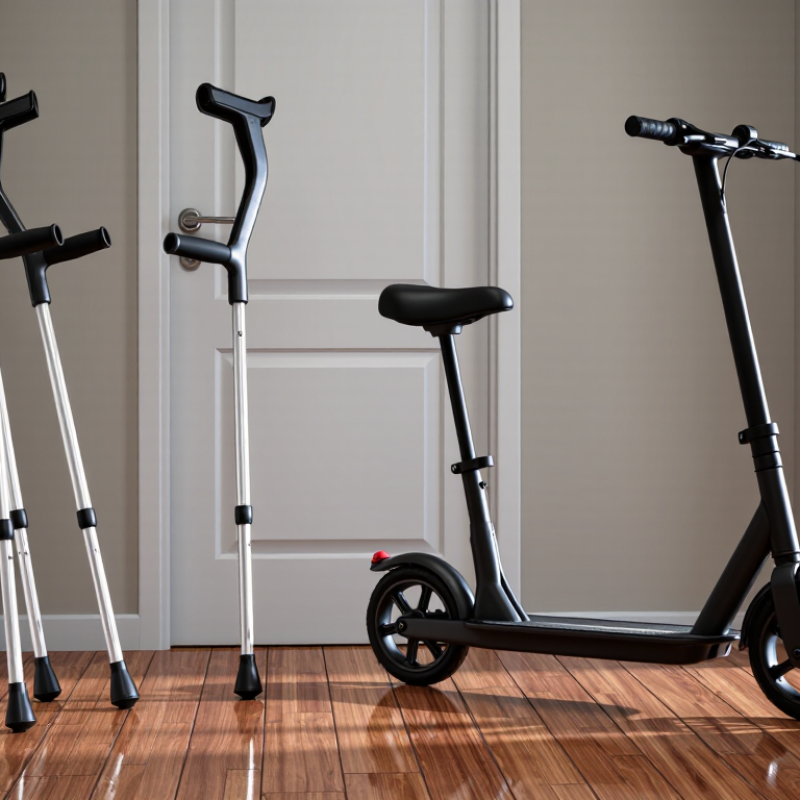
2026 Best Crutches vs Knee Scooter for Ankle Injury?

Define Ankle-Injury Severity and Weight-Bearing Status Before Choosing

Before choosing crutches or a knee scooter, confirm the injury and your prescribed weight-bearing status. A sprain, stable fracture, and unstable fracture can require very different support. The Ottawa Ankle Rules help clinicians decide when X-rays may be needed. A BMJ meta-analysis of 27 studies and 15,581 patients reported 97.6% sensitivity for detecting ankle fractures (Bachmann et al., 2003). These rules screen for possible fractures; they do not determine whether it is safe to walk.

Ask whether you are non-weight-bearing, partial-weight-bearing, or allowed to bear weight as tolerated. BOAST’s 2016 ankle-fracture standards say stable fractures may be managed with weight bearing as tolerated, while uncertain stability needs reassessment. Pain can mislead. A scooter may feel easier over a smooth hallway, but it requires balance, safe transfers, and enough room to turn. Crutches can suit strict weight limits, though they demand upper-body strength and careful use. Neither device makes an unapproved step safe.

Tips: Get the exact weight-bearing instruction in writing. Check whether you can safely hop, turn, and manage doorways before relying on crutches. With a scooter, test braking and transfers on a clear, level surface, ideally with help nearby. If swelling, pain, or balance changes, contact your clinician rather than guessing.

Compare Crutch and Knee-Scooter Mobility for Non-Weight-Bearing

For non-weight-bearing after an ankle injury, crutches and a knee scooter solve different mobility problems. Crutches keep the injured foot off the floor, but they demand arm strength, balance, and coordination. They can be easier in tight rooms and on short stairways, though stairs require careful instruction. A poor fit may cause pressure under the arms or sore hands. That matters.

A knee scooter lets you rest the injured leg on a padded platform and propel yourself with the other foot. On smooth floors, it may feel steadier and less tiring than crutches. But narrow doorways, loose rugs, slopes, and sudden turns can make steering harder. It also requires a comfortable, uninjured knee and enough balance to stop safely. Small detail, big difference. Neither device should be used to put weight on the injured ankle unless your care team permits it. Ask a clinician or physical therapist to check the fit and demonstrate transfers. Consider where you’ll move: a scooter may suit open, level rooms, while crutches can be more practical in cramped spaces. The best choice is not always obvious, and changing needs during recovery may call for reassessment.

2026 Best Crutches vs. Knee Scooter for Ankle Injury?

Comparing typical mobility features for non-weight-bearing

This checklist shows general capabilities, not a performance score. Crutches can be used on stairs with proper technique and training; knee scooters are generally not suitable for stairs. Both require hand control and can help keep the injured foot off the ground when used correctly. Follow your clinician’s weight-bearing instructions and consider your balance, strength, and surroundings.

Assess Fall Safety: CDC Reports 1 in 4 Adults 65+ Fall Each Year

An ankle injury can turn a familiar hallway into a fall hazard. The CDC reports that 1 in 4 adults aged 65 and older falls each year. That figure is a reminder to assess the whole person, not just the injured ankle. A past fall, poor balance, dizziness, vision changes, or sedating medication may affect which mobility aid feels safe. Small details matter. A loose rug or a wet bathroom floor can change the risk quickly.

Crutches require coordination, arm strength, and practice; they can be tiring when used for longer distances. A knee scooter may reduce pressure on the injured foot, but it requires balance, a suitable knee, and room to steer. Tight turns, thresholds, and slopes can be difficult. Neither option is automatically safer for every older adult. Not always. A clinician or physical therapist can assess the injury, strength, home layout, and fall history, then supervise a trial with the correct fit. Check brakes and tips before use, clear walking paths, and avoid rushing. It is easy to focus only on pain and overlook the route to the bathroom at night.

Match the Device to Balance, Home Layout, and Manufacturer Weight Limits

2026 Best Crutches vs Knee Scooter for Ankle Injury?

Match the Device to Balance, Home Layout, and Manufacturer Weight Limits

Choosing crutches or a knee scooter starts with your prescribed weight-bearing status, not convenience. A physical therapist can assess your gait, transfers, and turning before you leave care. Crutches require grip strength, upper-body effort, and coordinated steps. They may fit narrow bathrooms, but stairs and wet floors need careful practice. A knee scooter can reduce arm effort on smooth, level floors. It also needs steering control, room to turn, and a stable injured leg resting on its pad. Poor balance or discomfort in that position may make it unsuitable. Even small thresholds matter.

Map your real route: bedroom to bathroom, rugs, door lips, tight corners, and the entrance step. The World Health Organization’s 2021 Falls fact sheet estimates that 37.3 million falls yearly are serious enough to require medical attention. That figure is not device-specific, but it underlines the value of fall prevention. Ask a clinician to observe a practice trip. Check the exact model’s manual for its maximum user weight and any separate load limits. Limits vary by model, not simply by device type. Leave a safety margin rather than treating the stated limit as a target. A scooter that glides in a clinic may snag at home; I would reconsider after testing the bathroom turn.

Reassess Comfort, Skin Pressure, and Mobility With a Clinician

Choosing crutches or a knee scooter after an ankle injury is not just a question of speed. Your clinician should first confirm how much weight, if any, you can place on the injured leg. Crutches may suit stairs and tight rooms, but they demand arm strength and steady balance. A knee scooter can reduce hand loading on level floors, yet turning, thresholds, and crowded spaces may feel awkward.

Fit deserves a fresh check as swelling changes. With crutches, pressure should not rest in the armpits; handgrips should let your elbows bend slightly. A scooter’s knee pad should support the lower leg without rubbing the injured area. Fit matters. Ask a clinician to watch you walk, turn, sit, and stop. Look for numbness, tingling, new pain, or red marks that linger after you remove the aid. Small red marks matter.

Reassess at follow-up, not only on the first day. A hallway trial may feel easy, while a bathroom doorway or a few steps outside changes the picture. Tell the clinician where you plan to use the device and what feels tiring. Some people need another adjustment; that is not failure. It is easy to overlook skin pressure when mobility improves, so check your skin daily and report changes promptly.

FAQS

What should I confirm before choosing crutches or a knee scooter?

Confirm your injury and prescribed weight-bearing status with a clinician. Ask whether you must avoid weight, limit it, or bear weight as tolerated. Pain alone cannot answer that. Get the instruction in writing.

Are crutches or a knee scooter better for a strict weight limit?

Crutches may suit strict limits, but they require arm strength, coordination, and practice. A knee scooter may feel easier on level floors, but it still requires balance and safe transfers. Neither makes an unapproved step safe.

What can make a mobility aid unsafe at home?

Loose rugs, wet bathroom floors, tight doorways, and poor lighting can raise fall risk. Check the route to the bathroom, especially at night. Small obstacles matter.

What should older adults consider when choosing an aid?

Consider past falls, balance, dizziness, vision changes, and medicines that cause drowsiness. About one in four adults aged 65 and older falls each year. A supervised trial can help assess what feels manageable.

How should crutches and a knee scooter fit?

Crutch pressure should not rest in your armpits, and your elbows should bend slightly at the handgrips. A scooter’s knee pad should support your lower leg without rubbing the injured area. Fit can change as swelling changes.

What should I test before using a knee scooter?

On a clear, level surface, test the brakes, turning, and transfers, with help nearby if possible. Tight turns and thresholds may be awkward. Don’t rush.

What signs mean the aid needs reassessment?

Report numbness, tingling, new pain, or red marks that linger after removing the aid. Check your skin daily. I might overlook a small mark, too.

When should I reassess my mobility aid?

Reassess at follow-up, not only on the first day. Tell your clinician where you use the aid and what feels tiring. A hallway may feel easy; a bathroom doorway may not.

Conclusion

Choosing between crutches and a knee scooter starts with understanding the ankle injury and the clinician’s weight-bearing instructions. For someone who must keep weight off the injured ankle, both options can help with mobility, but they work differently: crutches require upper-body strength, coordination, and balance, while a knee scooter supports the injured leg on a padded platform and is pushed with the other foot. Crutches vs. Knee scooters: which is better for ankle injury? The answer depends on the person’s abilities and surroundings rather than one device being best for everyone.

Safety matters, especially for older adults: the CDC reports that 1 in 4 adults aged 65 and older falls each year. Consider balance, stairs, narrow doorways, floor surfaces, and the manufacturer’s weight limits before choosing a device. After using it, reassess comfort, pressure on the skin, and how easily you can move around. A clinician can help determine whether the device remains suitable as recovery progresses.

Oliver

Oliver

Oliver is a seasoned marketing professional with a wealth of expertise in driving brand awareness and engagement. With a deep understanding of our company's product offerings, he consistently delivers high-quality content that enriches our professional blog. His insights not only shed light on......